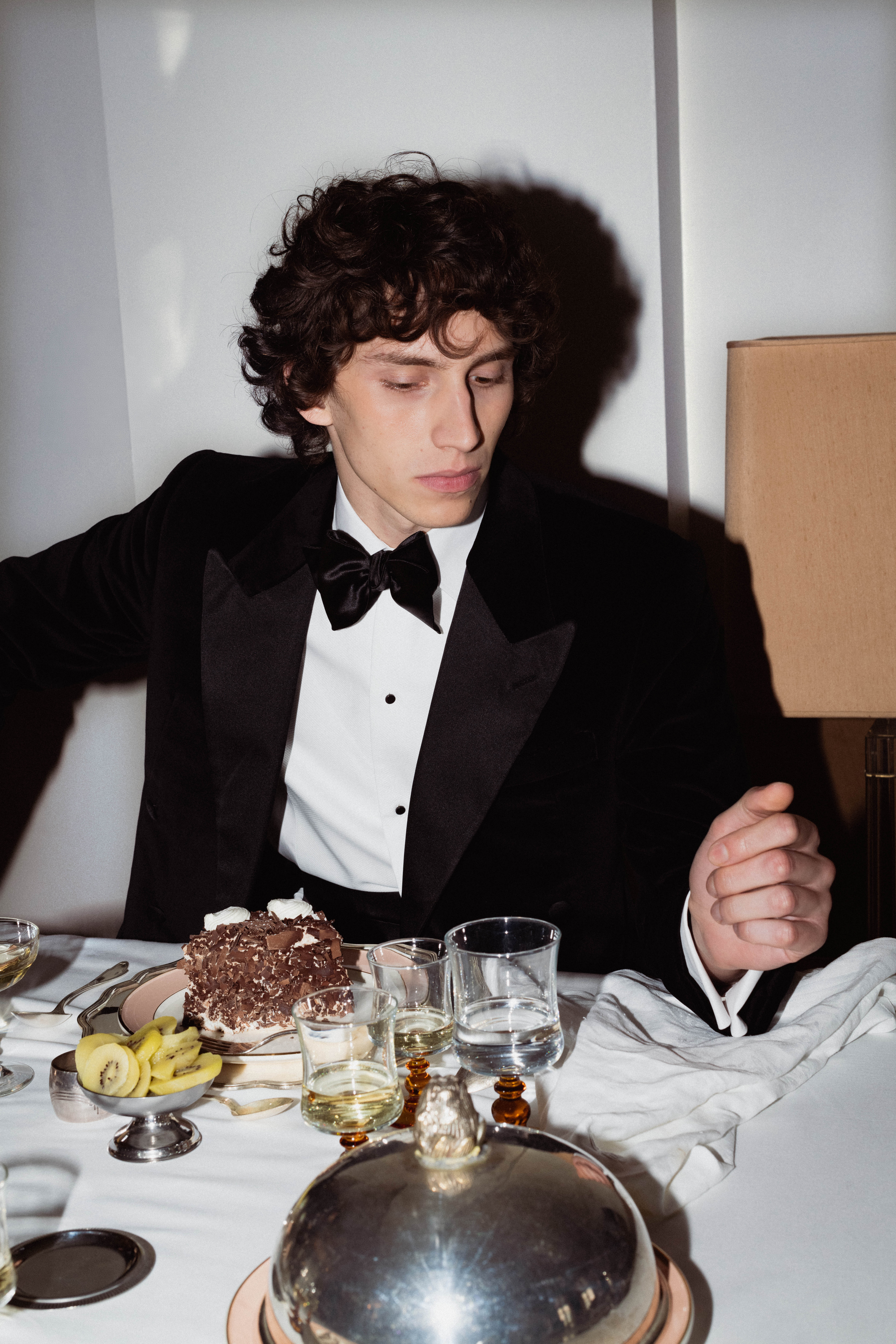
The Designer's Note: Black Tie

The Designer's Note: Black Tie

Categories : Advice

Black Tie dress code: what are the real rules (and should you follow them)?

"The invitation arrives: "Black Tie." An explanation is in order. If the card read White Tie, you’d be expected to wear full evening dress, complete with a tailcoat and a white bow tie. White Tie is a rare breed these days. Black Tie, on the other hand, is the dress code that demands one specific thing: a tuxedo and a black bow tie.

Faced with this, you might be tempted to cheat by throwing on a good dark suit and a black necktie. Which is a pity, really: the tuxedo is arguably the most elegant formal attire a man can wear. Today, sartorial shortcuts have become so widespread that showing up in a proper tuxedo is almost an act of rebellion. Following the Black Tie etiquette to the letter is ultimately the best way to stand out. Black Tie is the new Punk. Or close enough.

Historically, this attire was actually created to shake up the rules, and its paternity is heavily disputed across the Atlantic. The British claim its invention: as early as 1865, London tailor Henry Poole cut a short evening jacket in blue silk so the (very punk) Prince of Wales (the future Edward VII) could dine comfortably at his Sandringham estate. Read: no tailcoat required. Twenty years later, the idea crossed the ocean. In 1886, young American heirs imported this short jacket and caused a sensation at New York’s ultra-exclusive Tuxedo Club. What started as a provocation quickly became the gold standard of evening wear (giving the garment its American name, the Tuxedo, along the way).

Featuring silk-faced lapels (designed to catch the light) and trousers accented with a silk side stripe, the tuxedo is therefore in a league of its own. It is entirely unforgiving when it comes to accessories. Here is the breakdown:

The Bow Tie Self-tied, obviously. At Cinabre, they are first handmade in our ateliers, then pre-tied by us in their box. The ultimate late-night chic: letting your tie hang carelessly over an open collar as the night wears on.

The Tuxedo Shirt Underneath the jacket, forget the standard office shirt. The tuxedo shirt features a textured bib (pleated or piqué) that adds structure to the chest. The collar can be a wing or a turndown. And obviously, there's not a single sewn-on button in sight.

Shirt Studs and Cufflinks The French cuffs and the bib of your shirt demand flawless hardware. Fastening is done with removable studs, which should always match your cufflinks.

The Cummerbund The pleated silk cummerbund serves to mask that invariably awkward transition zone where the shirt tends to bunch up as it tucks into the trousers. By covering this unflattering area, it cleans up the silhouette and lengthens the leg.

Pocket Square and Lapel Flower The breast pocket should never be left empty. A white pocket square, tucked in without overthinking the geometry, does the job perfectly. Those in the know will pin a boutonnière—a silk flower handmade at Cinabre—for an even sharper look.

The Shoes For those looking to master the exercise all the way, opt for velvet slippers or opera pumps (low-cut patent leather shoes adorned with a silk bow).

Black Tie is my go-to dress code. My personal twist? Swapping the jacket for one of my Cinabre dressing gowns. Every party I host calls for Black Tie. The idea is to trigger an existential revelation (yes, really) in my guests: in a Black Tie ensemble, they will look impeccably sharp from the first glass of the evening until dawn. Because a man in a tuxedo always looks like he owns the place. Even if he’s just there to order a drink."